America Land of the Fre: A Designer's Take on Patriotic Embroidery
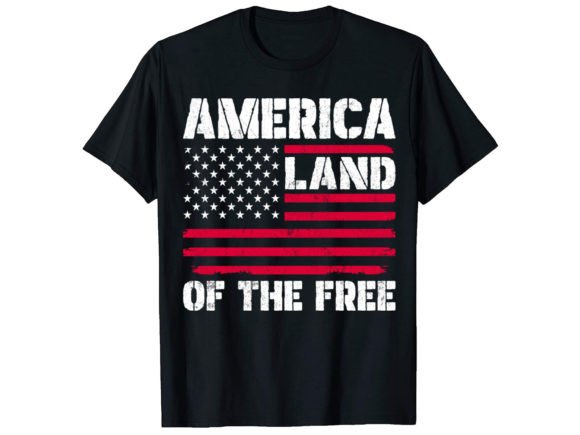
As a designer who spends more time staring at stitch previews than most people care to admit, I approach every new machine embroidery design with a mix of curiosity and skepticism. When I first pulled up the file for America Land of the Fre, my initial reaction was one of cautious optimism. The title suggests a classic patriotic theme, likely leaning into the bold, celebratory spirit of the 4th of July. However, the product description labels this as a "colorful Graphic T-Shirt Design" available as a PNG file. This immediately raises a critical question for us in the embroidery world: how does a graphic intended for print translate to thread?
In my experience, the gap between a vibrant digital graphic and a tangible finished product stitched onto fabric is where many projects succeed or fail. This review isn't just about whether the image looks pretty on a screen; it is about evaluating its potential as a functional embroidery project for real-world applications like custom apparel, boutique merchandise, and personalized gifts.
Visual Personality and First Impressions
The visual personality of America Land of the Fre leans heavily into the festive. Based on the description highlighting its use for banners, posters, and hoodies, the design likely features strong, saturated colors and a layout meant to grab attention from a distance. For an embroiderer, this implies a need for high contrast. If you are planning to digitize this PNG yourself or use a pre-digitized version derived from it, the mood it creates is undeniably Americana—bold, loud, and proud.
However, the term "Graphic" in the category description signals that this might be a raster image rather than a native embroidery file with defined stitch types like satin stitch or fill stitch. This is a crucial distinction. A graphic designed for a T-shirt print relies on smooth gradients and unlimited color blending, whereas embroidery relies on distinct thread colors and specific stitch directions. If you are using this as a reference to create your own digitization, the shape and theme offer a solid foundation for a statement piece. If you are expecting a ready-to-stitch file, you must verify the format, as working directly from a PNG can lead to unpredictable stitch density and poor coverage if not handled correctly.
Real-World Application: The Summer Boutique Scenario
Let's imagine a realistic scenario where this design shines. Picture a small shop owner preparing for the summer rush. They want to launch a line of custom apparel featuring limited-edition 4th of July gear. America Land of the Fre could serve as the centerpiece for a heavy cotton tote bag or a structured canvas apron. In this context, the colorful nature of the graphic translates well because canvas can support higher stitch counts without puckering.
I envision placing this design on the back of a denim jacket or the front of a thick fleece sweatshirt. These fabrics provide the stability needed for a large, detailed graphic. For an Etsy seller, offering this on a tote bag design series could be a smart move. The durability of embroidery adds perceived value compared to a simple vinyl heat press, making it a premium handmade product. Customers often associate the texture of thread with quality, and if the colors pop against a navy or white background, the buyer engagement on social media mockups could be significant.
Furthermore, this design fits naturally into the realm of holiday embroidery. Think about coordinated family outfits for a parade or a backyard barbecue. The thematic relevance is immediate. However, the execution matters. If the design includes tiny lettering or intricate corners, these areas might get lost on a textured fabric like a waffle-knit hoodie. It is best suited for items with a smooth surface where the "graphic" feel can be maintained through careful stitching.
Navigating Technical Challenges and Fabric Choices
While the aesthetic appeal is clear, we must discuss where America Land of the Fre requires careful handling. The description mentions suitability for caps and mugs, but embroidery on curved surfaces like caps is notoriously difficult for complex graphics. If the design has a wide horizontal spread, it may distort when stitched onto the front panel of a baseball cap. I would advise testing this on a flat surface first before attempting curved small shop products.
Fabric texture is another variable. On thin, stretchy fabrics like a lightweight tri-blend tee, a dense graphic design can cause severe puckering. Without the proper stabilizer—likely a cut-away for longevity—the design could warp after the first wash. For baby embroidery or delicate items, I would recommend scaling the design down significantly or simplifying the stitch count to ensure comfort against sensitive skin. Dense stitch areas can feel stiff and scratchy, which detracts from the giftability of the item.
Color contrast is also vital. Since this is described as "colorful," it likely uses reds, whites, and blues. On a dark fabric, you must ensure there is enough underlay or a light-colored backing to prevent the garment color from showing through the stitches. Conversely, on a white shirt, ensure the thread colors are vibrant enough not to look washed out. Testing the design in black and white mockups can help you judge the tonal value independent of the hue.
Practical Notes for the Professional Maker
Before committing this design to a client's order or listing it as a printable mockup in your portfolio, there are several steps a professional should take. First, always test the design on scrap fabric that matches your final material. This allows you to check for registration issues and thread breaks. Second, verify the licensing terms. The product description lists it under T-Shirt Designs and Graphics, but commercial rights for physical goods versus digital resale can vary. Confirm whether you are allowed to sell the finished product or if there are restrictions on the number of units.
If you are digitizing this PNG yourself, pay close attention to the hoop size. Large graphics require large hoops, which not all home machines support. You may need to split the design or resize it to fit a standard 5x7 or 6x10 hoop. Additionally, inspect small details. Graphics often have fine lines that do not translate well to thread. You may need to convert some elements to an applique design to reduce bulk and improve clarity, especially if you plan to use it on a pillow cover or kitchen towel that will undergo frequent washing.
Ultimately, America Land of the Fre offers a strong thematic hook for patriotic projects. Its value lies in its versatility across different mediums, from sweatshirt embroidery to embroidered patches. However, its success depends entirely on the technical execution. By respecting the limitations of the medium and choosing the right fabrics and stabilizers, you can turn this graphic concept into a high-quality commercial embroidery asset that builds brand consistency and customer trust. Whether you are a hobbyist making gifts or a seasoned pro running a craft business, treating this design with the technical respect it demands will ensure your final output stands out in a crowded market.