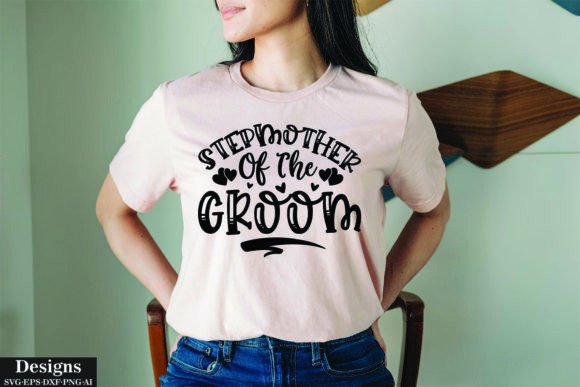
Stepmother of the Groom: A Designer’s Review
As a designer who spends more time staring at stitch simulations than I care to admit, I have learned that not every graphic translates well to thread. Some designs look fantastic on a screen but turn into a tangled mess under the needle. When I first pulled up the Stepmother of the Groom design files, my initial reaction was one of cautious optimism. This is a niche market, certainly, but it is a passionate one. Wedding apparel, particularly for the extended family, has seen a surge in demand for personalized, humorous, and heartfelt items. The question is not just whether the design looks good, but whether it holds up when stitched onto real fabric for a real person.
First Impressions and Visual Personality
The mood of this design strikes a balance between celebratory and slightly playful, which is exactly what you want for this specific role. The "stepmother" title often carries a heavy cultural baggage, so a design that feels light, welcoming, and stylish is essential. Visually, the layout appears clean. In the world of T-Shirt Designs, clutter is the enemy. You need immediate readability. From what I can see in the provided high-resolution PNG and JPG mockups, the typography and graphical elements are distinct. There is enough negative space to allow the stitches to breathe, which is critical for maintaining clarity.
What stands out to me is the versatility implied by the file types. Getting Ai, EPS, SVG, DXF, and PNG files means this is not just a rigid embroidery pattern. It is a comprehensive graphic asset. For an embroidery reviewer, this is a green flag. It tells me that if I need to tweak the size slightly before digitizing or if I want to use the graphic for a printable mockup to show a client, I have the tools to do so. The inclusion of transparent backgrounds in the PNG files is a small but significant detail that saves hours of editing time when creating product listings for Etsy or other small shop platforms.
Real-World Application: The Sweatshirt Test
Let’s move from theory to practice. Imagine a client comes to you with a request for a custom gift for her husband’s mother. She wants something she can wear during the wedding rehearsal dinner or the morning-of preparations. A heavy cotton sweatshirt is the ideal canvas here. This is where the Stepmother of the Groom design needs to prove its worth.
Because the files are described as 100% editable and color changeable, I can easily adapt the thread colors to match the wedding palette. If the wedding theme is sage green and ivory, I can adjust the design to complement those tones rather than clashing with them. This level of customization is what turns a generic handmade product into a cherished personalized gift. When stitching this onto a sweatshirt, the fabric texture plays a huge role. Sweatshirt fleece is thick and forgiving, which is great for covering any minor imperfections in stitch density. However, you must ensure your stabilizer is robust. A cut-away stabilizer is usually my go-to for garments that will be washed frequently, ensuring the design does not pucker over time.
Considering Fabric and Hoop Constraints
While sweatshirts are forgiving, other popular items like tote bags or caps present different challenges. If you are planning to use this design for a tote bag design, remember that canvas has a tight weave. You need to check the stitch density carefully. If the design has large areas of solid fill, it might pull the fabric if the density is too high. Since the product description mentions editable files, you have the advantage of being able to inspect the underlying vector paths in Illustrator or CorelDRAW before you even open your embroidery software. This allows you to anticipate potential issues with dense stitch areas.
For curved surfaces like caps, the placement is critical. The Stepmother of the Groom text needs to be arched correctly to follow the curve of the cap’s front panel. If the design includes intricate details or tiny lettering, these might get lost or become difficult to stitch cleanly on a textured hat fabric. I always recommend running a test stitch on scrap fabric that matches your final project. This is non-negotiable for professional results. Check how the satin stitch edges lay down and whether the running stitch outlines provide enough definition without looking sparse.
Commercial Viability for Small Businesses
For Etsy sellers and owners of small craft businesses, time is money. The value of this product lies not just in the design itself, but in the workflow efficiency it offers. Having access to SVG and DXF files means you can also use this design for vinyl cutting or sublimation if you offer mixed-media products. This cross-compatibility increases the perceived value of the purchase. You are not just buying an embroidery pattern; you are buying a suite of design assets.
When listing this as a finished product, such as an embroidered patch or a custom apron, the visual appeal of the mockups provided will help drive sales. The high-quality JPG mockups allow you to create professional-looking listings without having to photograph every single color variation yourself. This consistency helps build brand trust. Customers want to know exactly what they are getting. Clear, crisp images of the finished product reduce hesitation and increase conversion rates.
Navigating Licensing and Usage
One aspect that every serious designer must address is licensing. The product description states you get editable files and mockups, but it is vital to confirm the specific terms for commercial embroidery use. Can you sell physical items made with this design? Can you resell the digital file itself? Usually, purchasing a design file grants you the right to create physical goods for sale, but redistributing the digital file is prohibited. Always read the included instructions or license agreement carefully. Protecting your business and respecting the creator’s intellectual property is part of being a professional in this space.
Technical Notes for the Embroiderer
Before you load this design into your machine, take a moment to review the technical specifics. Since the exact stitch count is not provided in the summary, you will need to open the specific embroidery file format compatible with your machine (such as PES, DST, or JEF, depending on what is included in the full download package) to check the stitch count and estimated run time. High stitch counts can lead to longer production times and higher thread usage, which affects your pricing strategy.
- Test on Scrap: Always stitch out a sample on the same fabric type you intend to use for the final product.
- Check Contrast: Ensure your thread colors contrast sufficiently with the fabric. Light threads on dark fabrics may require an underlay stitch to prevent the fabric color from showing through.
- Inspect Details: Zoom in on the digital preview. Look for any extremely small elements that might not stitch out cleanly. If necessary, simplify or enlarge these parts using the editable AI or EPS files.
- Stabilizer Choice: Match your stabilizer to your fabric. Use tear-away for stable woven fabrics and cut-away for knits and stretchy materials.
In conclusion, the Stepmother of the Groom design offers a solid foundation for a variety of creative projects. Its strength lies in its adaptability and the comprehensive file formats provided. Whether you are creating a humorous gift for a wedding party or stocking your online shop with trendy apparel, this design allows for the professional finish that customers expect. By paying attention to fabric choice, stabilizer selection, and stitch quality, you can transform this digital file into a tangible, high-quality product that stands out in the crowded market of wedding merchandise.